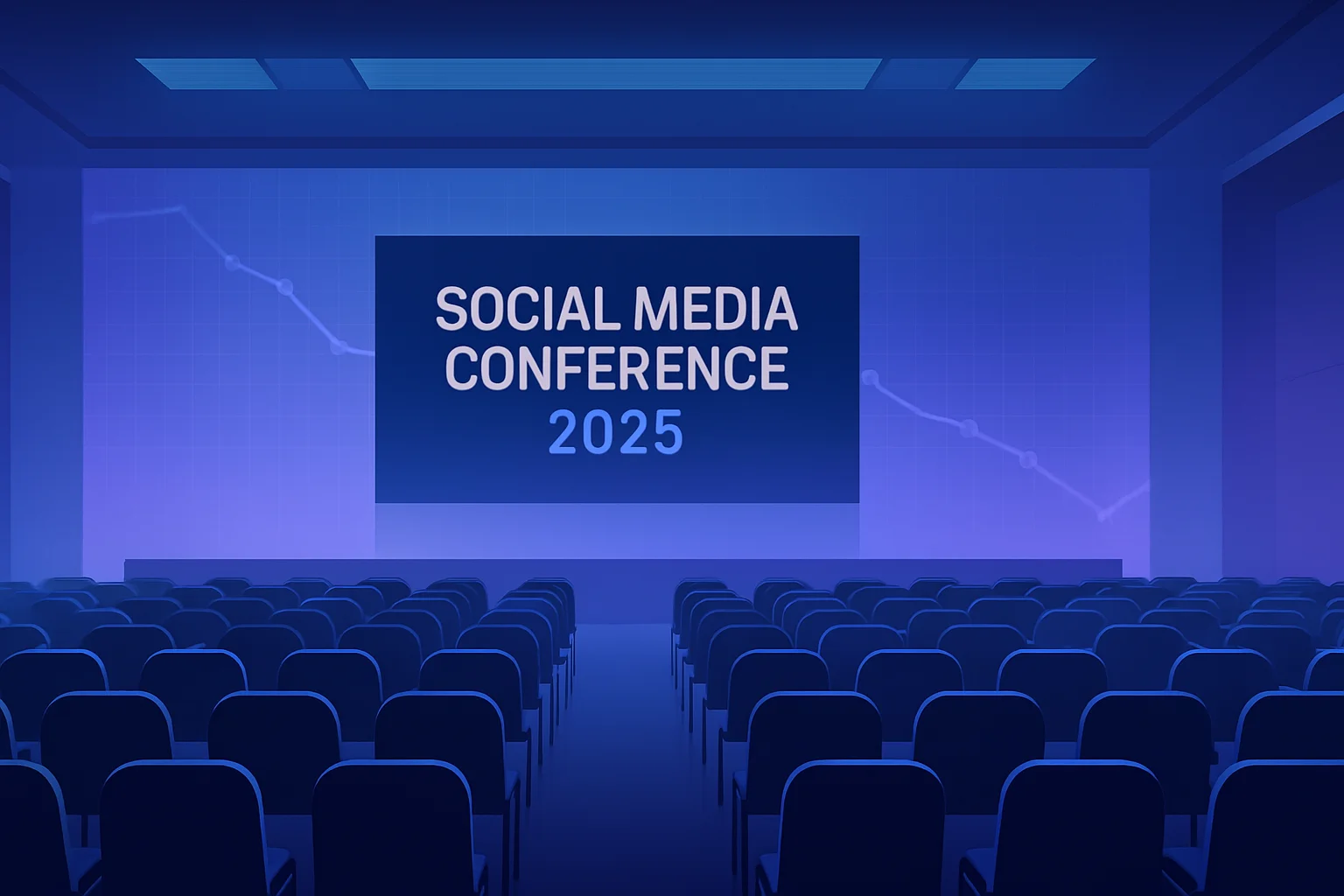
The landscape of professional networking and industry education is experiencing a dramatic transformation in 2025, with social media conferences witnessing an unprecedented decline in attendance and frequency. This shift represents more than just a temporary downturn—it signals a fundamental change in how marketing professionals, content creators, and digital strategists approach professional development and industry knowledge-sharing.
The decline of traditional social media conferences reflects broader changes in work culture, technological advancement, and economic considerations. As organizations reassess their training budgets and professionals reconsider the value proposition of in-person events, the conference industry faces its most significant challenge since the pandemic disruption of 2020-2021.
The Current State of Social Media Conferences

Attendance Decline Statistics
The numbers paint a stark picture of the current conference landscape. Major social media marketing conferences have reported attendance drops ranging from 30% to 50% compared to their peak years in 2018-2019. Mid-tier events have seen even steeper declines, with some conferences canceling entirely due to insufficient registration numbers.
Event organizers attribute this decline to multiple factors, including economic uncertainty, changing corporate policies on travel expenses, and the maturation of digital alternatives. The conferences that do proceed often operate at reduced capacity, with smaller venue spaces and condensed programming schedules.
Major Conference Cancellations and Postponements
Several high-profile social media conferences have either scaled back operations significantly or ceased operations altogether in 2025. Events that once attracted thousands of attendees now struggle to fill convention centers, leading organizers to pivot toward hybrid models or fully virtual experiences.
The cancellation trend extends beyond small boutique conferences to established industry events with decade-long histories. This consolidation reflects not just attendance challenges but also difficulties in securing sponsors and exhibitors who question the return on investment of conference participation.
Key Factors Driving the Decline
Economic Pressures and Budget Constraints
Corporate budget tightening has emerged as a primary driver of conference attendance decline. Marketing departments, which traditionally allocated substantial budgets for professional development and networking events, now face increased scrutiny on every expenditure. The cost of attendance—including registration fees, travel, accommodation, and lost productivity—often exceeds $3,000-$5,000 per employee for a typical three-day conference.
Companies increasingly view these expenses as discretionary rather than essential, especially when facing economic headwinds and pressure to demonstrate clear ROI on all investments. The shift toward remote work has also decentralized teams, making it harder to justify sending distributed employees to centralized events.
Small businesses and independent consultants, who once formed the backbone of conference attendance, face their own financial pressures. With tighter personal budgets and the availability of free or low-cost online alternatives, the value proposition of expensive conference attendance becomes harder to justify.
Rise of Virtual Alternatives and Digital Learning
The explosion of high-quality digital learning platforms has fundamentally altered the professional development landscape. Webinars, virtual summits, and online courses now provide specialized knowledge at a fraction of conference costs. These digital alternatives offer flexibility that traditional conferences cannot match—professionals can learn on their own schedules without travel disruptions.
Social media platforms themselves have become venues for knowledge-sharing, with LinkedIn Live, Twitter Spaces, and Instagram Live enabling real-time expert discussions and Q&A sessions. These spontaneous, authentic interactions often provide more value than formal conference presentations, which can feel scripted and sales-focused.
Professional communities on Slack, Discord, and specialized forums facilitate ongoing dialogue and relationship-building that extends far beyond the brief networking windows available at conferences. These digital spaces provide continuous engagement rather than the intense but fleeting connections formed at traditional events.
Evolving Work Patterns and Remote Culture
The normalization of remote work has fundamentally changed professional expectations around travel and in-person gatherings. After several years of remote-first operations, many professionals have become accustomed to work-life boundaries that exclude extensive travel. The enthusiasm for “getting back out there” that characterized 2022-2023 has given way to a more sustainable approach that prioritizes work-life balance.
Companies with distributed teams find it logistically challenging and expensive to coordinate conference attendance across multiple time zones and locations. The democratic approach of sending no one often prevails over the contentious decision of selecting which team members attend.
The environmental consciousness has also grown among marketing professionals, with many questioning the carbon footprint of conference travel. This awareness aligns with broader corporate sustainability commitments, making virtual attendance the more socially responsible choice.
Content Saturation and Information Accessibility
The democratization of information has diminished the exclusivity that once made conferences valuable. Previously, conferences provided rare access to industry insights, case studies, and expert knowledge unavailable elsewhere. Today, this same information typically becomes available online within days—or even hours—through blog posts, podcasts, and social media shares.
The proliferation of free content from thought leaders, brands, and agencies has created an information abundance that makes paid conference content less compelling. Professionals can access cutting-edge strategies and tactics without leaving their desks, reducing the urgency to attend live events.
Quality and Relevance Concerns
Many marketing professionals express frustration with conference content quality, citing sessions that prioritize sponsor interests over actionable insights. The feeling that conferences have become elaborate sales pitches rather than genuine educational experiences has eroded trust and enthusiasm.
The rapidly evolving nature of social media platforms means that conference content—often planned months in advance—can feel outdated by the time the event occurs. Algorithm changes, new features, and platform policy updates move faster than the conference planning cycle, making real-time digital learning more relevant.
Industry-Specific Challenges
Platform Instability and Uncertainty
The social media landscape in 2025 is characterized by unprecedented platform instability. Major platforms have undergone significant changes in ownership, features, and user bases, creating uncertainty about which platforms deserve professional focus and investment. This volatility makes it difficult for conference organizers to build relevant programming.
Professionals hesitate to invest in conference attendance focused on platforms that may fundamentally change or decline in relevance within months. The rapid rise and fall of platform features makes comprehensive, platform-specific conferences risky investments for both organizers and attendees.
Generational Shifts in Professional Development Preferences
Younger marketing professionals, particularly those in Gen Z, approach professional development differently than their predecessors. This generation prefers micro-learning, peer-to-peer knowledge sharing, and informal digital communities over formal conference settings. They value authenticity and accessibility over traditional networking rituals.
The conferences that thrived in the 2010s were built around networking approaches and formats that resonate less with emerging professionals. Coffee chats, business card exchanges, and formal keynote presentations feel outdated to a generation that builds professional relationships through DMs, collaborative projects, and online communities.
Impact on the Industry
Knowledge-Sharing Gaps
Despite the decline in traditional conferences, the need for industry knowledge-sharing persists. The fragmentation of learning across multiple digital platforms creates challenges in maintaining consistent professional standards and shared understanding of best practices.
The absence of large gathering spaces means fewer opportunities for unexpected connections and serendipitous conversations that spark innovation. While digital communities facilitate targeted interactions, they may lack the creative collision of ideas that occurs when diverse professionals gather in person.
Economic Consequences for Event Industry
The decline of social media conferences has significant economic implications for the broader events industry. Convention centers, hotels, catering services, and AV companies that built business models around the conference boom now face overcapacity and revenue shortfalls.
Cities that invested in convention infrastructure to attract business events must now diversify their economic development strategies. The ripple effects extend to restaurants, transportation services, and other hospitality businesses that benefited from conference attendees.
Effects on Professional Community Building
Traditional conferences served as important community-building mechanisms, creating shared experiences and relationships that strengthened professional networks. The decline of these gatherings may fragment the industry into smaller, more isolated groups lacking cohesive identity.
New professionals entering the field miss opportunities for mentorship and relationship-building that conferences provided. While digital alternatives offer some connection, they may not fully replicate the depth of relationships formed through in-person interaction.
Emerging Alternatives and Adaptations
Micro-Conferences and Local Meetups
In response to declining interest in large conferences, smaller, more focused events have emerged. Micro-conferences with 50-200 attendees offer intimacy and relevance that mega-events cannot match. These smaller gatherings often focus on specific niches within social media marketing, attracting deeply engaged participants.
Local meetup groups have experienced renewed interest as professionals seek convenient networking opportunities without travel requirements. These regular, informal gatherings provide ongoing community connection and knowledge-sharing at minimal cost.
Hybrid Event Models
Some conference organizers have found success with hybrid models that blend in-person and virtual participation. These events offer flexibility, allowing attendees to choose their engagement level based on budget, schedule, and preference.
Successful hybrid events require sophisticated technology and thoughtful design to ensure virtual participants feel included rather than like second-class attendees. When executed well, hybrid formats can expand reach while maintaining the benefits of in-person connection.
Specialized Virtual Summits
Industry-specific virtual summits have proliferated, offering focused content without travel requirements. These events typically span shorter timeframes—one or two days rather than three to five—and accommodate busy schedules with recorded sessions available on-demand.
Virtual summits can attract global audiences and more diverse speakers without the geographical and financial barriers of traditional conferences. The lower overhead allows organizers to offer free or low-cost access, democratizing professional development opportunities.
Community-Driven Learning Initiatives
Professional communities are creating their own learning experiences through member-led sessions, expert AMAs (Ask Me Anything), and collaborative problem-solving workshops. These grassroots initiatives often provide more practical value than formal conference programming because they address real-time challenges participants face.
The community-driven approach fosters authentic relationships and creates ongoing value beyond single events. Members develop trust and rapport through regular interaction, forming professional support networks that persist over time.
Conference Comparison Table
| Conference Type | Average Cost | Typical Attendance 2023 | 2025 Trend | Key Advantages | Main Drawbacks |
|---|---|---|---|---|---|
| Large Traditional Conference | $2,000-$5,000 | 2,000-5,000 | Down 40-50% | Comprehensive programming, major sponsors, celebrity speakers | High cost, generic content, overwhelming scale |
| Mid-Size Industry Event | $1,000-$2,500 | 500-1,500 | Down 35-45% | Balanced size, focused topics, meaningful networking | Still expensive, travel required, mixed content quality |
| Virtual Summit | $0-$500 | 1,000-10,000 | Up 25-30% | Accessible, affordable, flexible scheduling | Limited networking, screen fatigue, lower engagement |
| Micro-Conference | $300-$800 | 50-200 | Up 15-20% | Intimate setting, highly relevant, deep connections | Limited scope, fewer speakers, smaller vendor presence |
| Local Meetup | $0-$50 | 20-75 | Up 30-40% | Free/low cost, convenient, community-focused | Inconsistent quality, limited resources, smaller network |
The Future of Social Media Industry Events

Predictions for Recovery or Transformation
The traditional conference model is unlikely to return to its pre-2020 prominence, but the industry will adapt rather than disappear entirely. Future events will likely be smaller, more specialized, and more intentionally designed around specific outcomes rather than general education.
Conferences that survive will differentiate through exceptional experiential elements that cannot be replicated online—hands-on workshops, immersive experiences, and high-value networking facilitated through thoughtful programming and technology.
What Successful Events Will Look Like
Tomorrow’s successful social media conferences will prioritize quality over quantity, focusing on smaller cohorts of highly engaged participants rather than massive attendance numbers. These events will integrate technology seamlessly, using apps and platforms to facilitate meaningful connections before, during, and after the event.
Content will shift from presentation-heavy formats to interactive experiences where attendees co-create value through workshops, mastermind sessions, and collaborative problem-solving. The role of conference organizers will evolve from information providers to community facilitators and experience designers.
The Role of AI and Technology
Artificial intelligence and advanced matching algorithms will revolutionize conference networking, connecting attendees with similar interests, complementary expertise, or potential partnership opportunities. AI-powered tools will provide personalized agendas, recommend sessions based on learning goals, and facilitate follow-up connections.
Virtual and augmented reality technologies may eventually bridge the gap between digital convenience and in-person connection, creating immersive virtual conference experiences that replicate the feeling of physical presence without travel requirements.
Practical Implications for Professionals
How to Adapt Your Professional Development Strategy
Marketing professionals must diversify their learning approaches, combining digital resources, community participation, and selective in-person events based on specific needs and goals. Rather than defaulting to conference attendance, evaluate each opportunity against clear objectives and alternative options.
Invest in building strong professional networks through consistent digital engagement rather than relying on annual conference reconnections. Cultivate relationships through regular interaction, mutual support, and genuine interest rather than transactional networking.
Alternative Ways to Stay Current
Subscribe to curated newsletters, join professional communities, and participate in regular webinars to maintain current knowledge. Follow thought leaders and engage in meaningful discussions on social platforms where industry conversations happen in real-time.
Consider online certification programs, specialized courses, and skill-specific workshops that provide deeper learning than broad conference sessions. Many platforms offer flexible, self-paced learning that accommodates busy schedules while building verifiable credentials.
Making the Most of Conferences You Do Attend
When conference attendance makes sense, approach it strategically with clear objectives and advance planning. Research speakers and attendees beforehand, schedule specific meetings, and focus on building a few meaningful connections rather than collecting hundreds of business cards.
Participate actively in sessions, ask thoughtful questions, and contribute to discussions. Share your own expertise generously to build reputation and relationships. Follow up promptly after events to transform brief encounters into lasting professional relationships.
Conclusion
The decline of social media conferences in 2025 represents both a challenge and an opportunity for the industry. While traditional large-scale events struggle to justify their existence in a world of digital alternatives and economic constraints, new models emerge that better serve modern professional needs.
This transformation reflects broader changes in how we work, learn, and build professional relationships. Rather than mourning the decline of traditional conferences, professionals and organizers should embrace innovation and experimentation with formats that provide genuine value in today’s environment.
The future belongs to flexible, focused, and community-driven learning experiences that respect participants’ time, budgets, and preferences. Those who adapt to these changing dynamics will thrive, while those clinging to outdated models will continue struggling.
Success in this new landscape requires rethinking what professional development means and how industry communities maintain connection and shared knowledge. The conferences that survive and succeed will look dramatically different from their predecessors—more intimate, more interactive, and more intentionally designed around measurable outcomes.
For individual professionals, the decline of traditional conferences doesn’t diminish the importance of continuous learning and professional community. It simply requires more intentionality about how we invest our limited resources of time, money, and attention in growth opportunities that genuinely advance our careers and capabilities.


