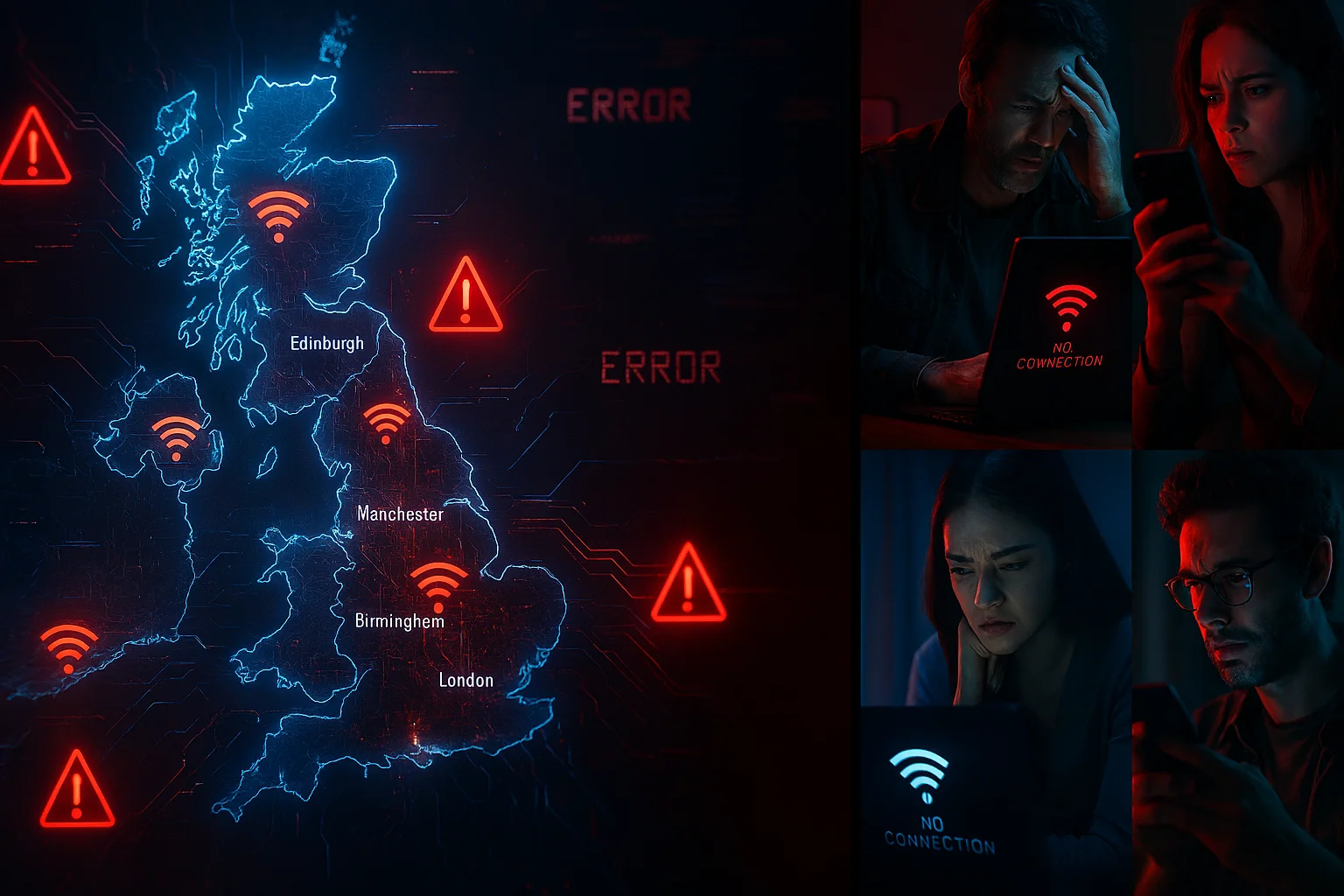
The United Kingdom faced significant internet disruptions on October 20, 2025, marking yet another challenging day for UK internet users. This latest incident follows closely on the heels of major Vodafone network outages on October 13, 2025, highlighting growing concerns about the reliability of digital infrastructure across Britain. The October 20 outage was primarily attributed to issues with Amazon Web Services (AWS), specifically affecting the US-EAST-1 region, which had cascading effects on numerous websites, applications, and services used by UK residents and businesses.
Understanding the October 20, 2025 Internet Outage

The AWS Connection
Amazon Web Services, one of the world’s largest cloud computing platforms, experienced significant technical difficulties on the morning of October 20, 2025. The company confirmed increased error rates and latencies for multiple AWS services in the US-EAST-1 region, which serves as a critical hub for countless internet services globally.
The disruption began around 9:00 AM British Time, precisely when many UK workers were preparing to start their workweek. AWS issued an official statement acknowledging the problems and noting that the issues were affecting multiple services, including case creation through the AWS Support Center.
How Cloud Service Failures Impact UK Users
While the primary technical failure occurred in Amazon’s US-EAST-1 data center region, the effects rippled across the globe, significantly impacting UK internet users. This demonstrates the interconnected nature of modern internet infrastructure and how regional technical problems in one geographic location can affect users thousands of miles away.
Cloud computing platforms like AWS provide essential backend services for:
- Major e-commerce websites
- Streaming services
- Social media platforms
- Banking applications
- Communication tools
- Business productivity software
- Gaming platforms
When these foundational services experience problems, the visible effect for end users is that their favorite websites, apps, and online services simply stop working properly or become completely inaccessible.
Timeline of Recent UK Internet Disruptions
October 13, 2025: The Vodafone Network Collapse
Just one week before the AWS-related problems on October 20, UK internet users experienced a devastating network outage affecting Vodafone customers. Beginning around 3:30 PM on Monday, October 13, this outage affected both mobile data services and home broadband connections for millions of users across the country.
Key Facts About the October 13 Vodafone Outage:
- Duration: Initial reports began at 2:30 PM, with service beginning to restore after approximately 2 hours, though some users experienced problems for over 5 hours
- Scale: Over 125,000 reports were logged on Downdetector within the first hour
- Services Affected: 4G mobile data, 5G mobile data, home broadband, and even Vodafone’s own website
- Root Cause: A non-malicious software issue with one of Vodafone’s vendor partners
- Secondary Impact: Sub-brands and mobile virtual network operators (MVNOs) using Vodafone’s infrastructure, including Voxi, Lebara, Talkmobile, and Onestream, were also affected
The October 13 outage was particularly frustrating for customers because Vodafone’s website and network status checker were also down, making it impossible for users to get official information about the problems or estimated restoration times.
October 20, 2025: AWS Outage Impacts UK Services
The morning disruption on October 20 affected a different segment of internet users but was equally disruptive. Unlike the Vodafone outage, which primarily affected mobile and home broadband connectivity, the AWS problems impacted specific websites and applications that rely on Amazon’s cloud infrastructure.
Critical Details:
- Time of Onset: Issues began around 9:00 AM British Time
- Primary Cause: AWS DynamoDB endpoint failures in the US-EAST-1 region
- Secondary Effects: Multiple AWS services experiencing errors and increased latency
- User Impact: Widespread disruptions to websites, applications, and online services used by UK consumers and businesses
Comparison Table: Recent UK Internet Outages
| Date | Provider/Cause | Start Time | Primary Services Affected | Estimated Users Impacted | Resolution Time |
|---|---|---|---|---|---|
| October 13, 2025 | Vodafone UK (Vendor Software Issue) | 2:30 PM BST | Mobile data (4G/5G), Home broadband, Voice services | 125,000+ reported cases | 2-5+ hours |
| October 20, 2025 | Amazon Web Services (US-EAST-1) | 9:00 AM BST | Cloud-dependent websites and apps | Widespread (exact number unconfirmed) | Ongoing at time of initial reports |
| October 13, 2025 | BT Broadband | 3:30 PM BST | WiFi connectivity, Email services | 2,628+ reported cases | Several hours |
Why Do Internet Outages Happen?
Technical Infrastructure Failures
Modern internet connectivity depends on complex layers of technology working seamlessly together. When any single component fails, the effects can cascade through the system:
Network Hardware Failures:
- Router malfunctions
- Switch failures
- Damaged fiber optic cables
- Power supply problems at data centers
Software and Configuration Issues:
- Buggy software updates
- Configuration errors
- Vendor partner software problems
- Security patch complications
External Factors:
- Physical damage to infrastructure (construction accidents, weather damage)
- Power outages at key facilities
- Overwhelming traffic volumes
- Cyber attacks (though less common than other causes)
The Cloud Computing Vulnerability
The October 20 AWS outage highlights a particular vulnerability in modern internet infrastructure: the concentration of services on a small number of large cloud platforms. When services from thousands of companies rely on the same underlying infrastructure, a single point of failure can have catastrophic widespread effects.
This centralization creates efficiency and cost savings during normal operations but represents a significant single point of failure risk. Even geographically distributed systems can be affected when the problem occurs at the software or service layer rather than just physical infrastructure.
Who Was Most Affected?
Residential Users
Home internet users faced significant disruption to their daily activities:
- Work-from-home employees unable to access corporate systems or attend video meetings
- Students unable to complete online coursework or research assignments
- Streaming entertainment services becoming unavailable
- Smart home devices losing connectivity
- Online shopping and banking becoming inaccessible
One particularly concerning report from the October 13 Vodafone outage noted a student in Peterborough unable to study for exams due to complete loss of internet connectivity, with no way to even contact Vodafone support for updates.
Business Impact
The business community faced severe productivity losses:
Small Businesses:
- Point-of-sale systems failing
- Unable to process online orders
- Loss of customer communication channels
- Cloud-based business software becoming inaccessible
Large Enterprises:
- Disruption to customer service operations
- Internal communication breakdowns
- Supply chain management complications
- Remote workforce unable to access systems
Critical Observations:
- Many businesses lack adequate backup internet connectivity solutions
- Cloud-dependent businesses are particularly vulnerable
- Mobile data backup options may be unavailable if mobile networks are also affected
What Can You Do When Internet Goes Down?
Immediate Troubleshooting Steps
Before assuming there’s a widespread outage, users should perform basic troubleshooting:
- Check Your Equipment:
- Restart your router by unplugging it for 30 seconds
- Verify all cables are securely connected
- Check for indicator lights showing connectivity
- Test with multiple devices to rule out device-specific problems
- Verify the Outage:
- Use mobile data (if available) to check Downdetector.com
- Visit your provider’s status page
- Check social media for reports from other users
- Contact your provider’s customer service line
- Alternative Connectivity:
- Switch to mobile data if available
- Use public WiFi at nearby cafes or libraries
- Share mobile hotspot with other household members
- Contact neighbors to see if other networks are working
Long-term Preparedness
Proactive measures can reduce the impact of future outages:
For Individuals:
- Maintain a mobile data plan as backup
- Download important documents for offline access
- Keep alternative communication methods available (phone numbers for important contacts)
- Consider a secondary internet provider if your work depends on connectivity
For Businesses:
- Implement redundant internet connections from different providers
- Develop offline operational procedures for critical functions
- Maintain cloud backups that sync automatically
- Create communication protocols for staff during outages
- Consider business interruption insurance that covers technology failures
Understanding Compensation Rights
Automatic Compensation Scheme
UK internet users have specific rights when services fail. Since 2019, major internet service providers are required to provide automatic compensation for service failures:
Compensation Rates:
- £9.76 per day for broadband outages lasting more than 2 days
- £27 per missed appointment when engineers fail to appear
- £7 per day when service isn’t started on the promised date
Important Conditions:
- Compensation is calculated from the point the problem is reported
- The first two days of an outage are not typically compensated
- Providers should apply compensation automatically without customers needing to request it
Making Claims
If automatic compensation isn’t applied:
- Keep detailed records of the outage (dates, times, impacts)
- Document all communication with your provider
- Submit a formal complaint to your provider
- Escalate to the Communications Ombudsman if unsatisfied with the provider’s response
- Consider switching providers if service reliability doesn’t improve
The Growing Concern: UK Internet Reliability
Pattern of Increasing Outages
The frequency of significant internet disruptions in the UK has raised concerns among consumers, businesses, and regulators:
2024-2025 Notable Incidents:
- Multiple region-specific outages throughout 2024
- October 13, 2025 Vodafone nationwide outage
- October 20, 2025 AWS-related disruptions
- Ongoing reports of intermittent service problems
Infrastructure Investment Needs
Industry experts point to several factors requiring attention:
Aging Infrastructure: Many parts of the UK’s internet infrastructure are based on older technology requiring modernization. The transition from copper to fiber-optic networks is ongoing but far from complete in many areas.
Capacity Constraints: Internet usage has grown dramatically, particularly with increased work-from-home arrangements and streaming services. Networks designed for lower usage levels struggle with current demands.
Vendor Dependency: The Vodafone October 13 outage was caused by a vendor partner’s software problem, highlighting how internet providers depend on complex supply chains of technology suppliers.
Regulatory Response
Ofcom, the UK communications regulator, has implemented various measures to improve service reliability:
- Automatic compensation requirements for service failures
- Network resilience standards
- Regular monitoring and reporting requirements
- Consumer protection rules
However, critics argue more aggressive regulatory intervention may be necessary to ensure adequate infrastructure investment and service reliability.
Tips for Different User Groups
For Home Users
Prevention:
- Choose providers with strong reliability records
- Read reviews from current customers before switching
- Understand your contract terms regarding service guarantees
- Keep provider contact information readily available
During Outages:
- Don’t repeatedly restart equipment unnecessarily
- Preserve mobile data for essential communications
- Inform work/school of connectivity issues promptly
- Check for local public WiFi options for urgent needs
For Students
Academic Preparation:
- Download course materials for offline access when available
- Maintain physical copies of critical resources
- Inform instructors of connectivity challenges
- Identify campus or public library access as backup
- Complete assignments ahead of deadlines when possible
For Remote Workers
Business Continuity:
- Discuss backup connectivity plans with your employer
- Keep essential work files synced for offline access
- Maintain clear communication protocols for reporting outages
- Consider coworking spaces with reliable internet as emergency backup
- Test mobile hotspot capabilities before you need them
For Small Businesses
Operational Resilience:
- Invest in dual internet connections from different providers
- Implement offline payment processing capabilities
- Maintain customer communication via multiple channels
- Document all outages for potential compensation claims
- Consider cyber insurance policies covering business interruption
The Future of UK Internet Infrastructure

Fiber Optic Expansion
The ongoing rollout of full-fiber broadband (FTTP – Fiber to the Premises) represents the most significant infrastructure improvement:
Benefits:
- Dramatically higher reliability than copper-based systems
- Greater capacity for increasing bandwidth demands
- Less susceptible to weather and physical damage
- Lower maintenance requirements over time
Challenges:
- Expensive installation costs, particularly in rural areas
- Disruption during installation
- Coordination between multiple network providers
- Extended timeline for national coverage
5G Network Development
Fifth-generation mobile networks offer potential backup connectivity and primary service options:
Advantages:
- Can serve as broadband replacement or backup
- Expanding coverage across urban and suburban areas
- Improving speeds and latency
- Competition among providers
Limitations:
- Coverage still developing in rural areas
- Capacity constraints during peak usage
- Weather sensitivity for higher-frequency 5G
- Cost considerations for high data usage
Cloud Infrastructure Redundancy
The October 20 AWS outage demonstrates the need for better cloud service resilience:
Industry Responses:
- Multi-region redundancy becoming standard practice
- Companies diversifying across multiple cloud providers
- Improved automatic failover capabilities
- Enhanced monitoring and rapid response systems
Conclusion: Living with Internet Uncertainty
The October 20, 2025 internet disruptions, following so closely after the October 13 Vodafone outage, serve as stark reminders that internet connectivity, despite being essential to modern life, remains vulnerable to various technical failures. Whether caused by vendor software problems, cloud infrastructure issues, or hardware failures, these outages highlight the fragility of the systems we depend upon daily.
Key Takeaways:
- Widespread Impact: Internet outages affect every aspect of modern life, from work and education to entertainment and commerce
- Multiple Causes: Problems can originate from internet service providers, cloud platforms, hardware failures, or software issues
- Preparedness Matters: Having backup connectivity options and offline capabilities can minimize disruption
- Consumer Rights: UK users have compensation rights for extended outages and should understand how to exercise them
- Improving Infrastructure: Ongoing investment in fiber networks and 5G technology promises better reliability, but challenges remain
- Shared Responsibility: Providers, regulators, and users all play roles in maintaining internet reliability
As the UK continues to digitize more services and increase dependence on internet connectivity, the importance of reliable infrastructure cannot be overstated. The outages of October 2025 should serve as catalysts for accelerated infrastructure investment, improved redundancy planning, and better communication during service disruptions.
For individual users, the lesson is clear: internet access cannot be taken for granted. Whether through backup connectivity options, offline preparation, or simply patience during disruptions, adapting to the reality of occasional outages has become a necessary part of digital life in the modern UK.
Quick Reference: Essential Information
Emergency Contacts
| Provider | Customer Service | Status Page |
|---|---|---|
| Vodafone | 191 (from Vodafone) / 03333 040 191 | vodafone.co.uk/status |
| BT | 0800 800 150 | bt.com/help/service-status |
| Virgin Media | 150 (from Virgin) / 0345 454 1111 | virginmedia.com/help/service-status |
| Sky | 0333 7591 018 | sky.com/help/service-status |
| TalkTalk | 0345 172 0088 | talktalk.co.uk/help/service-status |
Useful Resources
- Downdetector UK: downdetector.co.uk – Track real-time outage reports
- Ofcom: ofcom.org.uk – Regulatory information and complaint procedures
- Communications Ombudsman: ombudsman-services.org/sectors/communications – Independent dispute resolution
- ThinkBroadband: thinkbroadband.com – Technical news and outage information
Compensation Calculator
For outages lasting more than 2 days:
- Days 1-2: No compensation
- Day 3 onwards: £9.76 per day
- Example: 5-day outage = £29.28 (3 days × £9.76)


