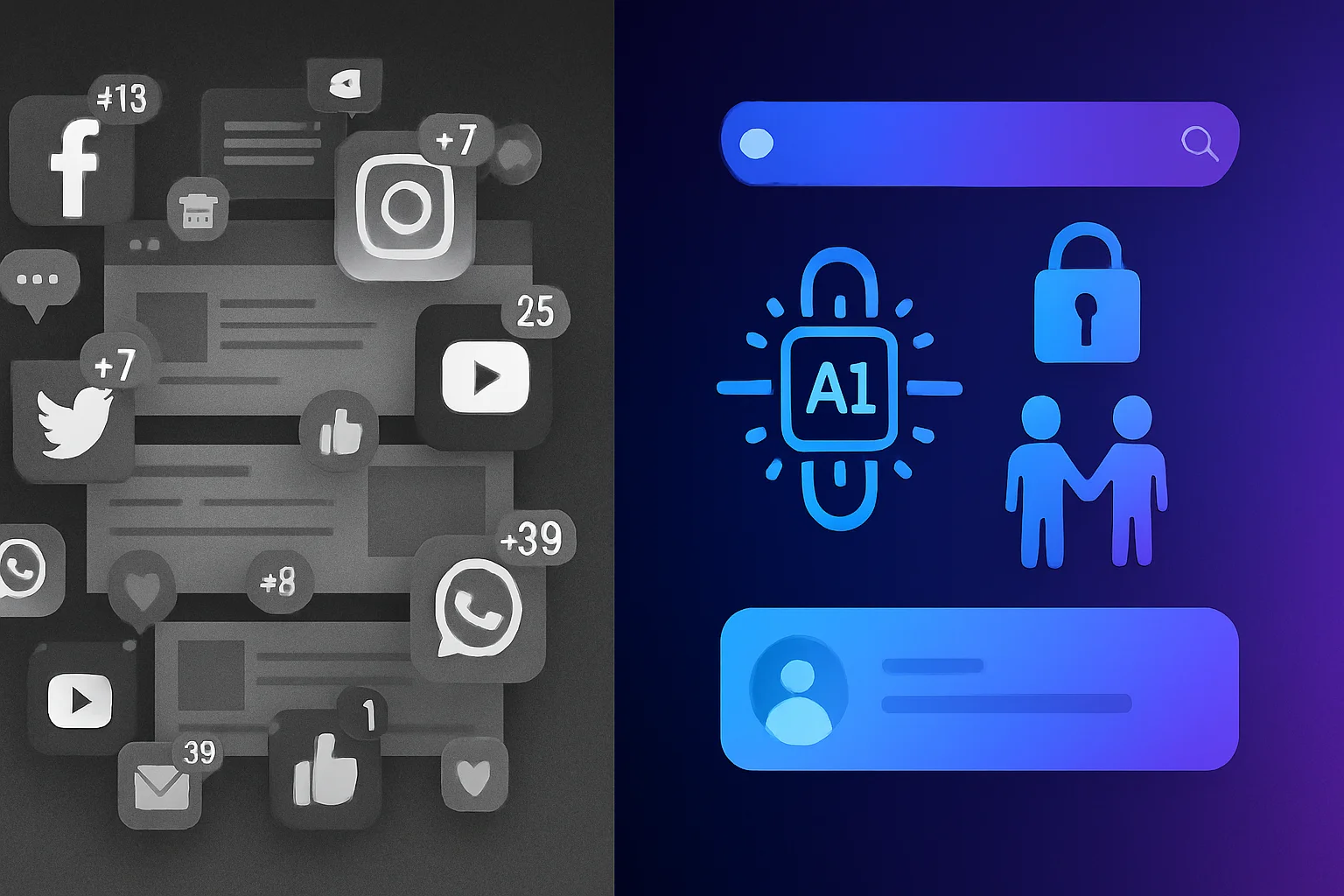
The Social Media Trends Breaking Down in May 2025 represents a pivotal moment of transformation where traditional engagement patterns are breaking down while new paradigms emerge. This comprehensive analysis reveals declining public engagement, shifting platform dominance, and the emergence of AI-driven content strategies that are fundamentally reshaping how brands and users interact online.
Table of Contents
| Section | Key Focus Area |
|---|---|
| 1. Introduction | Current State of Social Media |
| 2. Declining Trends | What’s Breaking Down |
| 3. Platform-Specific Changes | Individual Platform Analysis |
| 4. Rising Countertrends | What’s Growing |
| 5. User Behavior Shifts | Consumption Patterns |
| 6. Brand Implications | Strategic Adaptations |
| 7. Future Outlook | Predictions for Late 2025 |
| 8. Conclusion | Key Takeaways |
1. The Great Social Media Recalibration
May 2025 marks a watershed moment in social media evolution. After years of explosive growth and increasing complexity, the industry is experiencing what experts call “the great breakdown” – a period where established norms are crumbling while new patterns emerge. Traditional cable television viewership has declined dramatically, dropping from 34.4% in 2022 to just 29.6% in 2023, while social media usage continues its upward trajectory with Americans expected to spend nearly eight hours daily on social platforms by the end of 2025.
However, this growth masks significant underlying tensions. User fatigue, platform oversaturation, and concerns about content quality are driving unprecedented changes in how people engage with social media. This article examines the trends breaking down in May 2025 and what’s emerging to replace them.
2. Declining Trends: The Breakdown of Traditional Social Media

2.1 Public Engagement in Freefall
One of the most significant trends breaking down in May 2025 is public engagement on social media platforms. Social fatigue and content oversaturation have driven users away from the chaos of public feeds toward more intimate, controlled environments. Users increasingly prefer personalized interactions and deeper connections where they feel valued and heard rather than merely targeted by algorithms and advertisers.
This shift represents a fundamental breakdown of the original social media promise of connecting everyone publicly. Instead, users are retreating into private communities, closed groups, and direct messaging platforms where conversations feel more authentic and less performative.
2.2 Platform Quality Concerns
Research forecasts indicate that by 2025, approximately 50% of consumers will significantly limit their social media usage due to perceived declining platform quality. This represents a dramatic breakdown in user trust and satisfaction with major platforms. Users cite concerns including:
- Excessive advertising and sponsored content
- Algorithm manipulation reducing organic reach
- Misinformation and content quality issues
- Privacy and data security concerns
- Mental health impacts from constant connectivity
2.3 The Twitter/X Activity Collapse
Platform-specific data reveals a particularly dramatic breakdown on Twitter/X, where weekly posting frequency has dropped by 38% compared to previous periods. This decline in activity stems from multiple factors including user migration to competing platforms, controversial platform direction changes, and algorithmic modifications that have disrupted traditional engagement patterns.
2.4 Organic Reach Deterioration
Brands and content creators report an ongoing breakdown of organic reach across major platforms. Social media teams feel increasingly overextended managing multiple platforms while seeing diminishing returns on their efforts. The golden age of free organic visibility has definitively ended, forcing a recalibration of social media strategies toward paid promotion and more selective platform presence.
3. Platform-Specific Analysis: Where the Breakdown Hurts Most
3.1 Facebook: The Aging Giant
Facebook continues experiencing a slow but steady breakdown among younger demographics. While the platform maintains massive global reach, engagement quality deteriorates as Generation Z users abandon the platform entirely. The average Facebook user skews increasingly older, creating challenges for brands targeting younger consumers.
3.2 Instagram: Fighting Fatigue
Instagram faces its own breakdown challenges as users grow weary of highly curated content and constant pressure to present idealized lives. The platform’s pivot toward Reels to compete with TikTok has alienated photography enthusiasts who originally made Instagram successful. Stories engagement shows signs of plateauing after years of growth.
3.3 Twitter/X: The Controversial Decline
As mentioned, Twitter/X experiences the most dramatic breakdown with 38% reduction in posting frequency. Controversies surrounding platform policies, verification changes, and content moderation have accelerated user departures. Advertisers increasingly question the platform’s brand safety, further contributing to its decline.
3.4 LinkedIn: Professional Boundaries Breaking Down
Interestingly, LinkedIn’s traditional professional boundaries are breaking down in unexpected ways. The platform increasingly resembles Facebook with personal stories, motivational content, and casual posts replacing purely professional networking. While this increases engagement metrics, it dilutes LinkedIn’s unique value proposition.
3.5 TikTok: Sustainability Questions
Despite continued popularity, questions emerge about TikTok’s long-term sustainability. Content creator burnout increases as the algorithm demands constant posting to maintain visibility. The platform faces ongoing regulatory challenges that create uncertainty about its future availability in key markets.
4. Rising Countertrends: What’s Growing from the Breakdown
4.1 AI-Generated Content Revolution
As traditional content creation models break down, artificial intelligence emerges as the dominant force reshaping social media. Content experimentation using generative AI tools represents the number one social media trend for 2025. Brands embrace AI to streamline content creation, inform strategy, and refine every aspect of their social presence.
However, this trend carries complications. Consumer research indicates that 55% of users are more likely to trust brands committed to publishing human-created content rather than AI-generated material. This creates tension between efficiency and authenticity that brands must carefully navigate.
4.2 Private Communities and Intimate Spaces
As public engagement breaks down, private community platforms experience explosive growth. Discord, Telegram, private Facebook groups, and exclusive membership platforms offer refuge from the noise of public social media. Brands increasingly invest in owned community spaces rather than relying solely on platform algorithms.
4.3 Social Commerce Integration
While traditional social engagement declines, social commerce capabilities expand rapidly. Platforms invest heavily in native shopping features, product tagging, and seamless checkout experiences. The breakdown of social media as purely communication tools accelerates their transformation into comprehensive e-commerce ecosystems.
4.4 Video Content Dominance
Short-form video content continues its meteoric rise even as other content formats decline. TikTok’s influence on content consumption patterns proves so profound that all major platforms now prioritize video in their algorithms. The breakdown of text and static image dominance appears complete and irreversible.
4.5 Social Listening and Data Analytics
As organic reach breaks down, brands invest more heavily in social listening tools and sophisticated analytics. Understanding audience sentiment, tracking competitor activities, and identifying emerging trends through data analysis becomes essential for success in the new social media landscape.
5. User Behavior Shifts: How Consumption Patterns Are Breaking Down
5.1 The Search Evolution
Social media platforms increasingly function as search engines, breaking down the traditional distinction between social networking and information discovery. Users search topics directly on TikTok, Instagram, and Pinterest rather than using Google. This fundamental shift requires content optimization strategies similar to traditional SEO.
5.2 Attention Span Fragmentation
User attention spans continue breaking down into smaller fragments. Average video watch time decreases while content volume increases. Creators face pressure to capture attention within the first second and maintain engagement through constant stimulation. This creates challenges for brands attempting to communicate complex messages.
5.3 Authenticity Over Polish
The preference for polished, professionally produced content breaks down in favor of authentic, behind-the-scenes material. Users increasingly value relatability over production quality. This trend democratizes content creation while challenging brands accustomed to maintaining strict brand guidelines.
5.4 Nostalgia and Retro Aesthetics
Current trends report nostalgic aesthetics gaining significant traction. Styles like “Dolled Up,” “Primary Play,” and “Rebel Floats” indicate users seeking comfort in familiar, retro designs as modern social media’s overwhelming nature causes fatigue. This represents a breakdown of the constant push toward cutting-edge minimalism.
5.5 Multi-Platform Fatigue
Users increasingly resist maintaining presence across multiple platforms. Rather than attempting to be everywhere simultaneously, individuals consolidate their social media usage to two or three preferred platforms. This breakdown of platform ubiquity forces brands to make strategic choices about where to concentrate resources.
6. Brand Implications: Strategic Adaptations to the Breakdown
6.1 Quality Over Quantity
The breakdown of constant posting requirements allows brands to focus on quality over quantity. Rather than maintaining exhausting daily posting schedules across multiple platforms, successful brands concentrate on creating fewer, more impactful pieces of content. This strategic shift requires different skill sets and measurement approaches.
6.2 Platform Selectivity
Social media teams assess which platforms genuinely drive business results rather than attempting comprehensive coverage. The breakdown of the “be everywhere” mentality enables more focused, effective strategies. Brands exit platforms that don’t align with their audience or objectives, redirecting resources to higher-performing channels.
6.3 Community Building Investment
As public engagement breaks down, brands invest in owned community spaces and loyalty programs. Creating direct relationships with customers outside platform algorithms provides stability and control. This represents a fundamental strategic shift from renting attention to building owned audiences.
6.4 Transparency and Authenticity
The breakdown of overly curated brand personas forces adoption of more transparent, authentic communication styles. Brands share mistakes openly, address challenges honestly, and show the humans behind the corporate facade. This vulnerability builds trust even as traditional engagement metrics decline.
6.5 ROI Measurement Evolution
The breakdown of traditional metrics like likes and shares necessitates more sophisticated measurement approaches. Brands implement comprehensive attribution models, track customer lifetime value, and measure business impact rather than vanity metrics. This professionalization of social media marketing elevates its strategic importance.
7. Future Outlook: Predictions for Late 2025 and Beyond

7.1 Continued Platform Consolidation
The breakdown trend will likely accelerate platform consolidation. Smaller platforms struggle to compete with established giants’ resources. Niche platforms either find sustainable models serving specific communities or disappear entirely. The social media landscape becomes more concentrated even as individual platform power potentially declines.
7.2 Regulatory Intervention
Growing concerns about platform quality, mental health impacts, and data privacy will likely trigger regulatory interventions in major markets. These regulations could fundamentally reshape how social media operates, breaking down current business models and forcing new approaches to user engagement and monetization.
7.3 Decentralized Social Networks
As centralized platform trust breaks down, decentralized social network alternatives may gain traction. Technologies enabling user data ownership, interoperability between platforms, and resistance to algorithmic manipulation attract users seeking alternatives to traditional social media.
7.4 AI Integration Deepens
Artificial intelligence integration will deepen significantly beyond May 2025. Entire social media strategies may be AI-managed, from content creation through posting optimization to engagement analysis. The breakdown of purely human-managed social media appears inevitable, raising questions about authenticity and creativity.
7.5 Mental Health Considerations
Platforms will face increasing pressure to address mental health concerns as usage limitation trends continue. Features promoting healthy usage patterns, reduced engagement addiction, and improved well-being may become competitive differentiators as users prioritize mental health over constant connectivity.
8. Key Statistics and Data Points
Engagement Metrics Breaking Down
- 38% decline in Twitter/X weekly posting frequency
- 50% of consumers limiting social media usage due to quality concerns
- 29.6% cable TV consumption (down from 34.4% in 2022)
- 8 hours daily expected social media usage by end of 2025
- 55% of consumers prefer human-created over AI-generated content
Platform Demographic Shifts
- Generation Z increasingly abandons Facebook
- TikTok maintains dominance among users under 25
- LinkedIn experiences age demographic expansion
- Instagram Reels compete directly with TikTok
- Pinterest sees nostalgia-driven engagement increases
Content Format Evolution
- Short-form video dominates all other formats
- Static images show declining engagement rates
- Text-only posts receive minimal organic reach
- Live streaming maintains niche but engaged audiences
- Carousel posts outperform single images on Instagram
9. Actionable Strategies for Navigating the Breakdown
For Brands and Businesses
Content Strategy Adjustments:
- Reduce posting frequency while increasing content quality
- Invest in video production capabilities and training
- Experiment with AI tools while maintaining human oversight
- Create platform-specific content rather than cross-posting
- Develop authentic behind-the-scenes content programs
Platform Strategy:
- Conduct honest audits of platform ROI and effectiveness
- Exit underperforming platforms decisively
- Invest in community-building on remaining platforms
- Explore owned media alternatives to platform dependency
- Test emerging platforms with small experimental budgets
Measurement and Analytics:
- Move beyond vanity metrics to business impact measurement
- Implement attribution modeling for social media contributions
- Track customer lifetime value from social channels
- Monitor sentiment and brand health indicators
- Use social listening for competitive intelligence
For Content Creators
Sustainability Approaches:
- Focus on sustainable posting schedules preventing burnout
- Diversify income streams beyond platform monetization
- Build email lists and owned audience relationships
- Create evergreen content with longer usefulness
- Collaborate with other creators for mutual support
Audience Building:
- Prioritize authentic engagement over follower counts
- Develop niche expertise rather than broad appeal
- Create community spaces beyond main platforms
- Respond personally to build genuine relationships
- Share struggles and challenges, not just successes
10. Conclusion: Embracing the Breakdown
The social media trends breaking down in May 2025 represent not the end of social media but rather its necessary evolution. The unsustainable practices of constant posting, algorithm gaming, and superficial engagement give way to more authentic, sustainable, and strategically focused approaches.
Successful brands and creators will embrace this breakdown, viewing it as an opportunity to rebuild social media strategies on firmer foundations. By prioritizing quality over quantity, authenticity over polish, and genuine connection over vanity metrics, they can navigate this transformation successfully.
The breakdown of traditional social media creates space for innovation. Private communities, AI-assisted creation, social commerce, and new platforms will emerge from this creative destruction. Those who adapt quickly, experiment boldly, and maintain focus on genuine human connection will thrive in this new landscape.
May 2025 represents not the death of social media but its adolescence finally giving way to maturity. The chaotic growth phase ends; the strategic, purposeful phase begins. The question isn’t whether to participate in social media but how to participate more intelligently, sustainably, and effectively in this transformed environment.
Final Recommendations
Immediate Actions:
- Audit current social media presence across all platforms
- Identify and exit underperforming channels
- Increase investment in video content capabilities
- Implement comprehensive social listening tools
- Develop authentic, behind-the-scenes content strategies
- Test AI tools while maintaining brand authenticity
- Build owned community spaces independent of platforms
- Revise success metrics to focus on business impact
- Train teams on emerging platform features and tools
- Create contingency plans for continued platform changes
Long-term Strategy:
- View social media as one component of comprehensive marketing strategy
- Build direct customer relationships reducing platform dependency
- Invest in emerging technologies and platforms experimentally
- Prioritize team mental health and sustainable workflows
- Maintain flexibility to adapt as the landscape continues evolving
The trends breaking down in May 2025 clear the path for more effective, authentic, and sustainable social media marketing. By understanding these shifts and adapting accordingly, brands and creators can turn this period of disruption into an opportunity for competitive advantage and genuine connection with their audiences.


