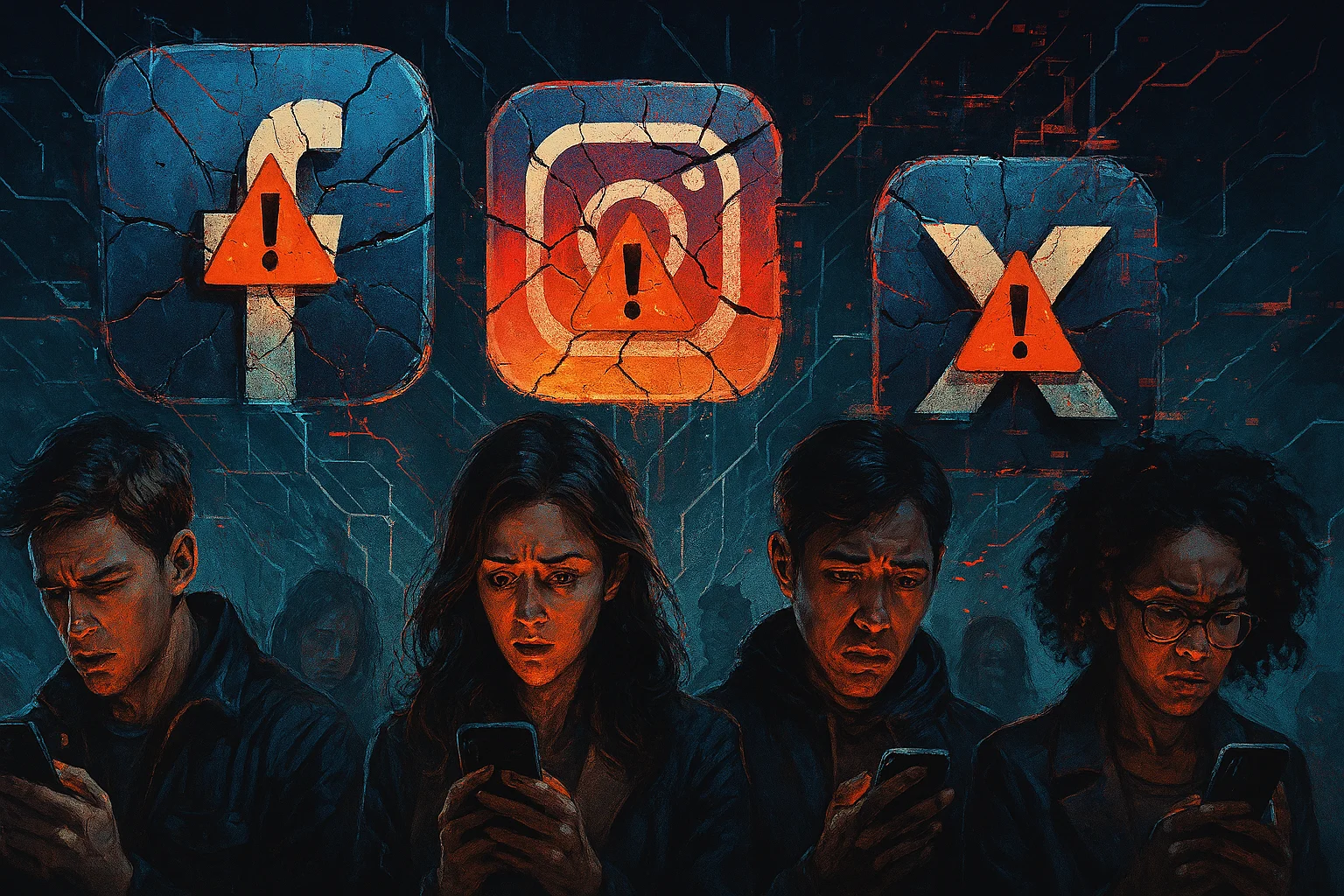
The year 2025 has witnessed unprecedented challenges for Social Media Platforms Going Down platforms, with major outages affecting billions of users worldwide. From Meta’s ecosystem experiencing significant downtime to X (formerly Twitter) facing multiple service disruptions, the reliability of social media infrastructure has come under intense scrutiny. This comprehensive analysis explores the causes, impacts, and implications of social media outages in 2025, examining how these digital disruptions affect individuals, businesses, and the broader internet ecosystem.
The State of Social Media Platforms Going Down Infrastructure in 2025

Social media platforms have become the backbone of modern digital communication, with over 63.9% of the world’s population actively using social networks. As of 2025, people collectively spend over 14 billion hours on social media every day, making these platforms critical infrastructure for business, communication, and information dissemination. However, this massive dependency has made outages increasingly impactful, affecting everything from personal communications to global commerce.
The complexity of modern social media infrastructure means that even minor technical issues can cascade into major outages affecting millions of users simultaneously. These platforms rely on intricate networks of data centers, content delivery networks, and interconnected services that must work in perfect harmony to deliver seamless experiences to billions of users.
Major Social Media Outages in 2025
Meta Platforms: Facebook, Instagram, and WhatsApp
Meta’s family of applications experienced significant disruptions throughout 2025, continuing a pattern of intermittent outages that have plagued the company in recent years. In December 2024, just before the new year, Meta platforms including Facebook, Instagram, WhatsApp, and Threads experienced substantial technical disruptions that left thousands of users unable to access their services.
In September 2025, a massive Meta outage affected Facebook, Instagram, WhatsApp, and other services, though the specific causes remained unclear. These outages prevented users from accessing their accounts, sending messages, and posting content, disrupting both personal communications and business operations that depend on Meta’s advertising and communication platforms.
The December 2024 incident saw more than 27,000 reported cases of disruption across the United States alone, with users experiencing difficulties logging in, accessing feeds, and sending messages. Meta attributed these issues to “technical problems,” but the vague explanation left many users and businesses frustrated about the lack of transparency regarding infrastructure vulnerabilities.
X Platform Outages
X (formerly Twitter) experienced multiple brief outages in 2025, with significant incidents in March and May affecting thousands of users who reported problems with the app, website, and server connections. The May 2025 outage was particularly notable, with reports reaching heights of 25,000 concurrent issues on monitoring platforms like DownDetector.
X’s official engineering account acknowledged the May problems, explaining that a data center outage caused the performance issues. Users reported various problems ranging from inability to sign in to disrupted direct messaging functionality. The outage stretched into the weekend before full functionality was restored, highlighting the challenges even tech billionaire Elon Musk’s platform faces in maintaining consistent service reliability.
The frequency of X outages in 2025 marks a concerning trend for the platform, which underwent significant infrastructure changes following Musk’s acquisition in 2022. The August 2024 outage, where 66% of users experienced problems, set a precedent for the recurring issues seen throughout 2025.
Root Causes of Social Media Outages
Infrastructure and Configuration Issues
Social media outages typically stem from several technical factors, with infrastructure failures and configuration errors being the most common culprits. These massive platforms operate through complex networks of servers, databases, and interconnected systems distributed across multiple data centers worldwide.
Configuration changes, while necessary for platform improvements and security updates, represent one of the highest-risk activities in maintaining social media infrastructure. A single misconfigured setting can cascade through interdependent systems, causing widespread service disruption. Historical incidents, such as the major 2021 Facebook outage, demonstrated how Border Gateway Protocol (BGP) routing errors could completely isolate a platform’s servers from the global internet.
Data Center Failures
Physical infrastructure failures at data centers continue to pose significant risks to social media availability. Power outages, cooling system failures, network equipment malfunctions, and even natural disasters can disrupt service delivery. The geographic distribution of data centers provides some redundancy, but when multiple data centers experience coordinated issues or when critical primary facilities fail, the impact can be severe and widespread.
DNS and Network Routing Problems
Domain Name System (DNS) issues represent another critical vulnerability for social media platforms. DNS servers translate human-readable domain names into IP addresses that computers use to locate services. When DNS infrastructure fails or becomes misconfigured, users cannot reach the platform even if the underlying servers remain fully operational.
Network routing problems, particularly BGP configuration errors, can effectively make platforms “disappear” from the internet. These issues are particularly challenging because they often require physical access to infrastructure to resolve, meaning remote troubleshooting becomes impossible once the problem manifests.
Increased System Complexity
The integration of artificial intelligence features, expanded service offerings, and interconnected ecosystems has dramatically increased the complexity of social media platforms. Meta’s 2025 AI expansion across Facebook, Instagram, WhatsApp, and Messenger, integrating Llama-powered models and assistant features, was accompanied by service interruptions, interface glitches, and security incidents.
This added complexity creates more potential failure points and makes troubleshooting more challenging. When multiple services depend on shared infrastructure components, a failure in one area can trigger cascading problems across the entire ecosystem.
Impact on Users and Businesses
Personal Communication Disruption
Social media outages in 2025 have highlighted how dependent modern communication has become on these platforms. When WhatsApp, Facebook Messenger, or Instagram go down, millions lose their primary means of staying in touch with friends, family, and social networks. This is particularly problematic in regions where these platforms have effectively replaced traditional SMS and phone calls as the primary communication method.
The psychological impact shouldn’t be underestimated either. For many users, particularly younger demographics, social media represents a crucial connection to their social circles. Millennials, the most active demographic on social media with 69.2% using these platforms in 2025, experience significant disruption when services become unavailable. Gen Z users spend an average of nearly three hours daily on social media, making outages particularly impactful for this age group.
Business and Economic Consequences
The economic impact of social media outages extends far beyond user inconvenience. Small businesses that rely on Facebook and Instagram for marketing, customer service, and sales suffer immediate revenue losses when these platforms go down. E-commerce businesses using social media for product discovery and sales conversions see dramatic drops in traffic and transactions during outages.
Advertisers lose precious campaign hours, and the interruption can be particularly costly during peak shopping seasons or promotional events. Content creators who monetize their social media presence lose income opportunities, and businesses that use WhatsApp Business for customer communications find themselves unable to serve their clients effectively.
The 2021 Facebook outage reportedly cost the company approximately $100 million in lost advertising revenue for just six hours of downtime. Extrapolating this to the multiple outages experienced in 2025, the cumulative financial impact on Meta alone likely reaches hundreds of millions of dollars, not counting the broader economic ripple effects on businesses dependent on these platforms.
Migration to Alternative Platforms
During major outages, users consistently migrate to alternative platforms seeking to maintain their online connections. Twitter, Discord, Signal, and Telegram typically see substantial traffic spikes when Meta platforms go down, sometimes causing performance issues on these alternative networks as well.
This pattern reveals both the redundancy built into the social media ecosystem and its fragility. When one major platform fails, the alternatives aren’t always equipped to handle the sudden influx of displaced users, potentially creating a domino effect of service degradations across multiple platforms.
The Beginning of the End? Long-term Implications
Declining Trust in Big Social Media
Industry analysis suggests that 2025 may mark the beginning of the end for major social media platforms, with declining trust and accelerating exodus from these services reshaping how brands approach customer engagement. The recurring outages compound other concerns about these platforms, including privacy issues, content moderation controversies, and algorithm-driven content manipulation.
Consumer trust has shifted significantly, with users increasingly preferring user-generated content over influencer promotions and corporate messaging. This trend, combined with reliability concerns, suggests a fundamental shift in the social media landscape. Brands are recognizing that dependence on platforms they don’t control represents a strategic vulnerability.
Platform Diversification Strategy
Forward-thinking businesses are responding to social media unreliability by diversifying their digital presence. Rather than concentrating efforts exclusively on major platforms, companies are investing in owned channels including dedicated websites, mobile applications, email marketing, and SMS communications. This multi-channel approach provides resilience against platform-specific outages and reduces dependence on any single service provider.
The concept of “owned media” versus “borrowed media” has gained prominence in digital marketing strategy discussions. While social media represents valuable borrowed media that can amplify reach, smart businesses recognize that building direct relationships through owned channels provides more stability and control.
Regulatory Scrutiny and Infrastructure Requirements
The frequency and impact of social media outages in 2025 have attracted increased regulatory attention worldwide. Governments are beginning to question whether platforms serving billions of users should face mandatory reliability standards similar to other critical infrastructure providers like utilities and telecommunications companies.
Discussions about infrastructure resilience requirements, mandatory backup systems, and transparency in outage reporting have entered policy conversations in multiple jurisdictions. The European Union, in particular, has shown interest in extending critical infrastructure regulations to major digital platforms.
Technical Solutions and Prevention Strategies
Redundancy and Failover Systems
Social media companies continue investing in redundant infrastructure to minimize outage impacts. This includes geographically distributed data centers, duplicate DNS infrastructure, and automated failover systems that can reroute traffic when problems are detected. However, the complexity of implementing true redundancy across systems serving billions of users presents enormous technical and financial challenges.
Best practices suggest maintaining at least three independent data center locations for critical services, with automated health monitoring and traffic management systems capable of detecting and responding to failures within seconds. The challenge lies in ensuring that these systems themselves don’t become single points of failure.
Improved Testing and Deployment Procedures
Configuration changes represent one of the highest-risk activities for social media platforms, making rigorous testing procedures essential. Leading platforms employ canary deployments, where changes are rolled out to small user percentages first, allowing problems to be detected before affecting the entire user base.
Automated testing frameworks, staged rollouts, and comprehensive rollback procedures help minimize the risk of configuration-related outages. However, the pressure to continuously deploy new features and improvements means that change management remains a perpetual balancing act between innovation and stability.
Transparency and Communication
Users and businesses increasingly demand better communication during outages. Rather than vague “technical difficulties” messages, stakeholders want detailed information about what went wrong, how long recovery will take, and what steps are being implemented to prevent recurrence.
Some platforms have improved their status pages and communication protocols, providing real-time updates during incidents. However, there’s still significant room for improvement in transparency, particularly regarding the root causes of outages and the specific steps being taken to address underlying vulnerabilities.
User Preparedness and Alternatives
Backup Communication Channels
Users and businesses should maintain multiple communication channels to ensure continuity when any single platform experiences downtime. This means having active accounts on multiple social networks, maintaining email contact lists, and using direct communication methods like phone calls or SMS for critical conversations.
For businesses, this diversification extends to marketing channels, customer service platforms, and payment processing systems. Relying exclusively on Facebook Marketplace or Instagram Shopping creates vulnerability; having a dedicated e-commerce website provides essential backup capability.
Emergency Communication Plans
Organizations dependent on social media for communications should develop and test emergency response plans for platform outages. These plans should identify alternative communication channels, designate responsibility for executing the backup strategy, and include pre-prepared messaging for customers and stakeholders.
Regular drills help ensure that when outages occur, teams can respond quickly and effectively without scrambling to develop solutions in real-time. The most prepared organizations maintain communication trees that can function entirely independently of social media platforms.
Future Outlook: What to Expect

Continued Outage Frequency
Industry experts anticipate that social media outages will remain a recurring challenge throughout 2025 and beyond. The increasing complexity of these platforms, combined with the constant pressure to innovate and add features, creates ongoing risk of technical issues. While platforms continue improving their infrastructure, the scale at which they operate means that perfect reliability remains an elusive goal.
Decentralization Trends
The recurring reliability issues with centralized social media platforms are fueling interest in decentralized alternatives. Platforms built on blockchain technology or federated protocols promise greater resilience by distributing infrastructure across many independent operators rather than depending on single corporate entities.
While these alternatives remain niche in 2025, growing user frustration with traditional platforms could accelerate adoption. The technical and user experience challenges of decentralized systems continue to limit mainstream appeal, but these technologies are maturing rapidly.
Enhanced Regulatory Framework
Expect governments worldwide to develop more comprehensive regulatory frameworks for social media platforms, potentially including reliability requirements, mandatory incident reporting, and penalties for extended outages affecting critical communications. These regulations will likely vary significantly by region, creating compliance challenges for global platforms.
The definition of social media platforms as “critical infrastructure” could fundamentally change how these companies are regulated and held accountable for service reliability. This shift would represent a significant evolution in how governments view and treat digital communications platforms.
Data Analysis: Social Media Outages in 2025
Outage Frequency by Platform
| Platform | Major Outages (2025) | Average Duration | Users Affected (Peak) | Primary Causes |
|---|---|---|---|---|
| X (Twitter) | 3+ incidents | 2-6 hours | 25,000+ concurrent reports | Data center failures, configuration issues |
| 2+ incidents | 3-8 hours | 50,000+ concurrent reports | Technical issues, infrastructure problems | |
| 2+ incidents | 3-8 hours | 40,000+ concurrent reports | Shared Meta infrastructure issues | |
| 2+ incidents | 2-6 hours | 30,000+ concurrent reports | Meta platform dependencies | |
| Meta AI Services | Multiple | Varies | Undisclosed | AI integration glitches |
Impact Metrics
| Impact Category | Measurement | 2025 Data |
|---|---|---|
| Global Social Media Users | Total users | 5.17 billion (63.9% of world population) |
| Daily Time on Social Media | Hours per day | 14+ billion collective hours |
| Millennials on Social Media | Percentage using | 69.2% |
| Gen Z Daily Usage (Female 16-24) | Average time | 2 hours 59 minutes |
| Business Dependency | Percentage relying on social media | 70%+ of small businesses |
| Estimated Economic Impact per Hour | Meta platforms | $15-20 million |
User Demographics Most Affected
| Age Group | Social Media Usage | Impact Level | Primary Platforms |
|---|---|---|---|
| Gen Z (16-24) | Highest engagement | Critical | Instagram, TikTok, Snapchat |
| Millennials (25-34) | Most active overall | Severe | Facebook, Instagram, X |
| Gen X (35-54) | Moderate engagement | Moderate | Facebook, LinkedIn |
| Boomers (55+) | Growing adoption | Moderate | Facebook, YouTube |
Regional Impact Analysis
| Region | Most Used Platforms | Outage Impact | Alternative Platform Usage |
|---|---|---|---|
| North America | Facebook, Instagram, X | High | Discord, Signal |
| Europe | Facebook, Instagram, WhatsApp | Very High | Telegram, Signal |
| Asia Pacific | WhatsApp, Instagram, X | Critical | WeChat, LINE, KakaoTalk |
| Latin America | WhatsApp, Facebook, Instagram | Critical | Telegram, Signal |
| Middle East | WhatsApp, Instagram, X | Very High | Telegram |
| Africa | WhatsApp, Facebook | Extremely Critical | SMS, Telegram |
Graph: Social Media Outage Trend Analysis
Social Media Major Outage Incidents by Year (2021-2025)

30 |                                              ╔══╗
   |                                              ║  ║
25 |                                              ║  ║
   |                                          ╔══╗║  ║
20 |                                          ║  ║║  ║
   |                                      ╔══╗║  ║║  ║
15 |                                      ║  ║║  ║║  ║
   |                              ╔══╗    ║  ║║  ║║  ║
10 |                              ║  ║    ║  ║║  ║║  ║
   |                      ╔══╗    ║  ║    ║  ║║  ║║  ║
 5 |              ╔══╗    ║  ║    ║  ║    ║  ║║  ║║  ║
   |      ╔══╗    ║  ║    ║  ║    ║  ║    ║  ║║  ║║  ║
 0 |══════╩══╩════╩══╩════╩══╩════╩══╩════╩══╩╩══╩╩══╩═
   |     2021    2022    2023    2024    2025
   |                                        (Projected)

Legend: Each block represents major outages affecting 10,000+ users
Average Outage Duration by Platform (2025)

Platform         Duration (Hours)
X                [████████] 4.2
Facebook         [█████████████] 5.8
Instagram        [█████████████] 5.8
WhatsApp         [███████] 3.5
Telegram         [██] 1.2
Signal           [█] 0.8

Each █ represents 0.5 hours of average downtime
User Migration During Outages (Percentage Increase)

Alternative Platform Growth During Meta Outages:
Telegram        [████████████████████] +200%
Signal          [███████████████] +150%
Discord         [████████████] +120%
X (Twitter)     [██████████] +100%
Snapchat        [██████] +60%

Each █ represents 10% increase in active users
Business Continuity Recommendations
For Small Businesses
- Diversify Your Presence: Maintain active accounts on at least three different social media platforms
- Own Your Data: Build email lists and customer databases independent of social platforms
- Create Direct Channels: Invest in a website with e-commerce capabilities
- Backup Customer Communications: Collect phone numbers and alternative contact methods
- Prepare Outage Messaging: Have pre-written communications ready to inform customers of alternative contact methods
For Enterprises
- Multi-Channel Strategy: Implement comprehensive digital presence across owned and borrowed media
- Infrastructure Monitoring: Deploy tools to detect platform outages immediately
- Crisis Communication Plans: Develop detailed response protocols for major outages
- Redundant Systems: Ensure critical business functions can operate without social media
- Regular Audits: Assess and reduce dependency on any single platform quarterly
For Individual Users
- Backup Contacts: Maintain phone numbers and email addresses for important contacts
- Alternative Apps: Install and familiarize yourself with backup communication platforms
- Critical Communications: Use multiple channels for important messages
- Expectation Management: Recognize that no platform guarantees 100% uptime
- Digital Wellness: Use outages as opportunities to disconnect and reduce screen time
Conclusion
The social media landscape of 2025 has revealed the fundamental vulnerability of our increasingly digital-dependent society. Major platforms experiencing recurring outages affecting billions of users worldwide has prompted necessary conversations about infrastructure reliability, business continuity, and the wisdom of concentrating so much human communication through a handful of corporate-controlled platforms.
While social media platforms continue investing in infrastructure improvements and redundancy systems, the complexity and scale of these services means that perfect reliability remains impossible. Users and businesses must adapt to this reality by maintaining diverse communication channels and reducing dependency on any single platform.
The outages of 2025 may ultimately prove beneficial if they accelerate the evolution toward more resilient, decentralized, and diversified digital communication ecosystems. Whether through improved infrastructure, enhanced regulatory frameworks, or the emergence of alternative platforms, the path forward requires acknowledging that when digital giants stumble, millions feel the impact.
The key lesson from 2025’s social media disruptions is clear: in our interconnected world, digital resilience requires diversity, preparation, and the wisdom to never put all our communication eggs in one basket—no matter how dominant that platform may seem.


