
The digital marketing industry has experienced unprecedented volatility in recent months, with Social Media Specialist Jobs Down positions showing a notable decline as we approach May 2025. This downturn represents a significant shift in an industry that has been a cornerstone of modern marketing strategies for over a decade. The reduction in available positions has left many professionals questioning the future of social media careers and wondering what factors are driving this unexpected contraction.
Key Statistics: The Numbers Behind the Decline
| Metric | Q1 2025 | Q4 2024 | Change (%) |
|---|---|---|---|
| Total Job Postings | 12,400 | 18,700 | -33.7% |
| Entry-Level Positions | 3,200 | 5,800 | -44.8% |
| Mid-Level Roles | 6,100 | 8,900 | -31.5% |
| Senior Positions | 3,100 | 4,000 | -22.5% |
| Average Salary Offered | $58,200 | $62,400 | -6.7% |
| Remote Opportunities | 45% | 62% | -17% points |
Primary Factors Contributing to the Decline
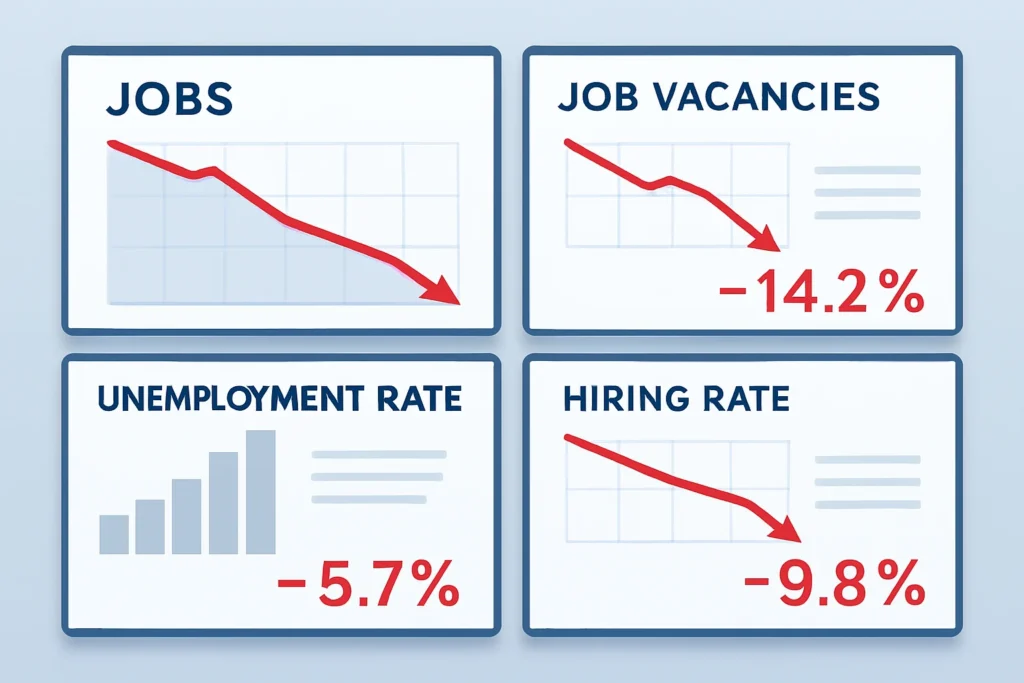
Economic Uncertainty and Budget Constraints
The current economic climate has forced many companies to reassess their marketing budgets, with social media departments often bearing the brunt of cost-cutting measures. Organizations are consolidating roles, expecting fewer specialists to manage multiple platforms and responsibilities. This trend reflects a broader pattern of corporate belt-tightening that has affected numerous sectors throughout 2025.
Artificial Intelligence Integration
The rapid advancement of AI-powered social media tools has fundamentally altered the landscape of content creation and community management. Many tasks previously requiring human specialists, such as scheduling posts, analyzing engagement metrics, and even generating creative content, can now be automated. This technological evolution has led companies to reduce headcount while maintaining or even increasing their social media output.
Market Saturation and Competition
Over the past five years, the social media specialist role became one of the most popular career paths for marketing professionals. This surge in trained specialists has created an oversaturated job market where supply significantly exceeds demand. The competition for available positions has intensified, with employers now able to be increasingly selective about their hires.
Shift in Platform Priorities
Major social media platforms have undergone significant changes in their algorithms and business models, affecting how brands approach their social media strategies. Some companies are scaling back their presence on certain platforms or redirecting resources toward emerging channels, resulting in restructured teams and fewer specialized roles.
Industry Sectors Most Affected
Technology and Startups
The technology sector, traditionally a major employer of social media specialists, has experienced substantial layoffs and hiring freezes. Startups, in particular, are prioritizing lean operations and often require team members to wear multiple hats rather than hiring dedicated social media professionals.
Retail and E-Commerce
Retail brands are increasingly relying on influencer partnerships and user-generated content rather than maintaining large in-house social media teams. This strategic shift has reduced the demand for traditional social media specialist roles in favor of partnership managers and affiliate marketing coordinators.
Entertainment and Media
While entertainment companies still value social media presence, many are consolidating their digital teams to create integrated marketing departments where social media is just one component of a broader digital strategy.
Regional Variations in Job Availability
North America
The United States and Canada have seen the most dramatic decreases in social media specialist positions, with major metropolitan areas like New York, Los Angeles, and Toronto experiencing 30-40% reductions in available roles. However, certain niche markets, particularly in healthcare and nonprofit sectors, continue to show stable demand.
Europe
European markets have demonstrated more resilience, with the decline averaging around 20-25%. Countries with strong digital marketing sectors, such as the United Kingdom, Germany, and the Netherlands, continue to offer competitive opportunities, though at reduced volumes compared to previous years.
Asia-Pacific
The Asia-Pacific region presents a mixed picture, with established markets like Singapore and Australia experiencing declines similar to North America, while emerging markets in Southeast Asia continue to show growth in digital marketing roles, including social media specialists.
Skills in Demand Despite the Downturn
Data Analytics and Performance Metrics
Employers are increasingly prioritizing candidates who can demonstrate strong analytical capabilities. The ability to interpret complex data sets, understand attribution models, and translate metrics into actionable business insights has become essential for securing available positions.
Paid Social Advertising
Professionals with expertise in managing substantial advertising budgets across multiple platforms remain highly sought after. The focus has shifted from organic content creation to performance-driven paid campaigns that deliver measurable ROI.
Video Content Creation
Short-form video content continues to dominate social media consumption patterns. Specialists who can conceptualize, film, edit, and optimize video content for platforms like TikTok, Instagram Reels, and YouTube Shorts maintain a competitive advantage in the job market.
Crisis Management and Community Relations
Brands face increasing scrutiny on social media, making reputation management skills invaluable. Specialists who can navigate sensitive situations, manage negative feedback constructively, and maintain brand integrity during challenging circumstances are particularly valued.
Adaptation Strategies for Job Seekers
Diversify Your Skill Set
The most successful social media professionals in today’s market are those who position themselves as comprehensive digital marketers rather than platform-specific specialists. Developing complementary skills in email marketing, content strategy, SEO, and marketing automation significantly improves employability.
Build a Personal Brand
Demonstrating your expertise through your own social media presence has become increasingly important. Potential employers want evidence of your ability to grow audiences, create engaging content, and drive meaningful engagement. A strong personal brand serves as a living portfolio of your capabilities.
Consider Freelance and Contract Work
With fewer full-time positions available, many professionals are finding success in the freelance market. Companies still need social media expertise but are increasingly turning to contractors for project-based work or temporary coverage, offering flexibility for both parties.
Stay Current with Emerging Platforms
While established platforms like Facebook, Instagram, and LinkedIn continue to dominate, emerging social networks present opportunities for early adopters. Specialists who establish expertise in new platforms position themselves as valuable resources for companies looking to explore these channels.
Alternative Career Paths for Social Media Specialists
Content Marketing Manager
The transition from social media specialist to content marketing manager represents a natural career progression. This role encompasses broader responsibilities, including content strategy across multiple channels, editorial calendars, and integrated campaigns.
Digital Marketing Generalist
Many companies now prefer hiring digital marketing generalists who can manage social media alongside other responsibilities such as email campaigns, website updates, and basic graphic design. This versatility makes professionals more valuable in cost-conscious organizations.
Community Manager
Community management roles focus on building and nurturing online communities across various platforms. These positions often offer more stability than traditional social media specialist roles because they emphasize relationship-building over content volume.
Influencer Relations Specialist
As brands shift toward influencer partnerships, professionals who can identify, vet, negotiate with, and manage influencer relationships are increasingly in demand. This career path leverages social media expertise while focusing on partnership development.
Employer Perspectives: Why Companies Are Reducing Headcount
Efficiency Through Technology
Organizations are leveraging sophisticated social media management tools that streamline workflows and reduce the need for multiple team members. Platforms like Hootsuite, Sprout Social, and HubSpot enable single specialists to accomplish what previously required entire teams.
Strategic Realignment
Many companies are questioning the ROI of maintaining large social media presences across numerous platforms. Strategic realignments often result in focused efforts on fewer channels with smaller, more specialized teams.
Budget Reallocation
Marketing budgets are being redirected toward paid advertising, influencer partnerships, and emerging technologies like AI-powered personalization. These shifts often come at the expense of traditional social media team positions.
Future Outlook: What to Expect Beyond May 2025

Potential for Market Correction
Economic cycles suggest that the current downturn may represent a market correction rather than a permanent decline. As companies adapt to new realities and economic conditions potentially improve, hiring could stabilize or even rebound in late 2025 or early 2026.
Evolution of Role Requirements
The social media specialist role is evolving rather than disappearing. Future positions will likely require broader skill sets, deeper analytical capabilities, and greater strategic thinking. Professionals who adapt to these changing requirements will find opportunities even in a contracted market.
Emergence of Specialized Niches
While generalist social media roles decline, specialized niches are emerging. Areas like social commerce, community-led growth, and platform-specific optimization (particularly for newer platforms) present opportunities for specialists willing to develop deep expertise.
Integration with Other Marketing Functions
The trend toward integrated marketing teams will continue, with social media becoming one component of broader digital marketing roles. This integration may reduce standalone social media positions but will increase opportunities for professionals with diverse skill sets.
Practical Action Plan for Current and Aspiring Social Media Specialist Jobs Down
Immediate Steps (Next 30 Days)
Audit your current skills against market demand by reviewing job postings in your target market. Identify gaps and prioritize one or two high-value skills to develop immediately. Update your resume and LinkedIn profile to emphasize analytical capabilities, strategic thinking, and measurable results rather than just content creation.
Short-Term Goals (3-6 Months)
Enroll in courses or certification programs focused on data analytics, paid advertising, or emerging platforms. Begin building case studies that demonstrate your impact on business metrics rather than just engagement statistics. Network actively within your industry through virtual events, LinkedIn engagement, and professional associations.
Long-Term Strategy (6-12 Months)
Consider whether transitioning to a related role might offer better career prospects and job security. Explore opportunities in adjacent fields like digital marketing, content strategy, or brand management. Develop a personal brand that showcases your unique perspective and expertise to differentiate yourself in a competitive market.
Conclusion: Navigating the Changing Landscape
The decline in social media specialist positions in May 2025 represents a significant challenge for professionals in the field, but it also presents an opportunity for evolution and growth. Those who view this downturn as a catalyst for skill development, strategic repositioning, and career advancement will ultimately emerge stronger and more versatile.
The fundamentals of social media marketing remain valuable to businesses across all industries. However, the way companies structure their teams and define these roles is changing rapidly. Success in this evolving landscape requires adaptability, continuous learning, and a willingness to embrace broader responsibilities beyond traditional social media management.
For professionals committed to careers in digital marketing, the current environment demands resilience and strategic thinking. By understanding the forces driving these changes, developing in-demand skills, and remaining flexible about career trajectories, social media specialists can navigate this challenging period and position themselves for long-term success in an industry that, despite current headwinds, remains central to modern business strategy.
The key lies not in resisting these changes but in embracing them as opportunities to become more valuable, versatile professionals capable of contributing to organizational success in multiple ways. The social media specialist of tomorrow will likely look quite different from today’s version, but for those willing to evolve alongside the industry, opportunities will continue to exist.